
In the centre of a darkened space, the rectangular hologram is displayed on a wooden plinth, illuminated directly from above by a shuttered theatrical spotlight.
Light falls onto the holographic surface, which in turn casts a shadow onto the floor below. The installation is part of the Peripheral View group of works, which aims to dislocate the viewer’s initial connection with the holographic image.
Title: Elevated Voids
Date: 2015
Dimensions: 29 x 29 x 60 cm
Materials: Digital hologram, shuttered theatrical spotlight
Produced during the Summer Lodge 2015 residency at Nottingham Trent University, 29 June – 10 July 2015.
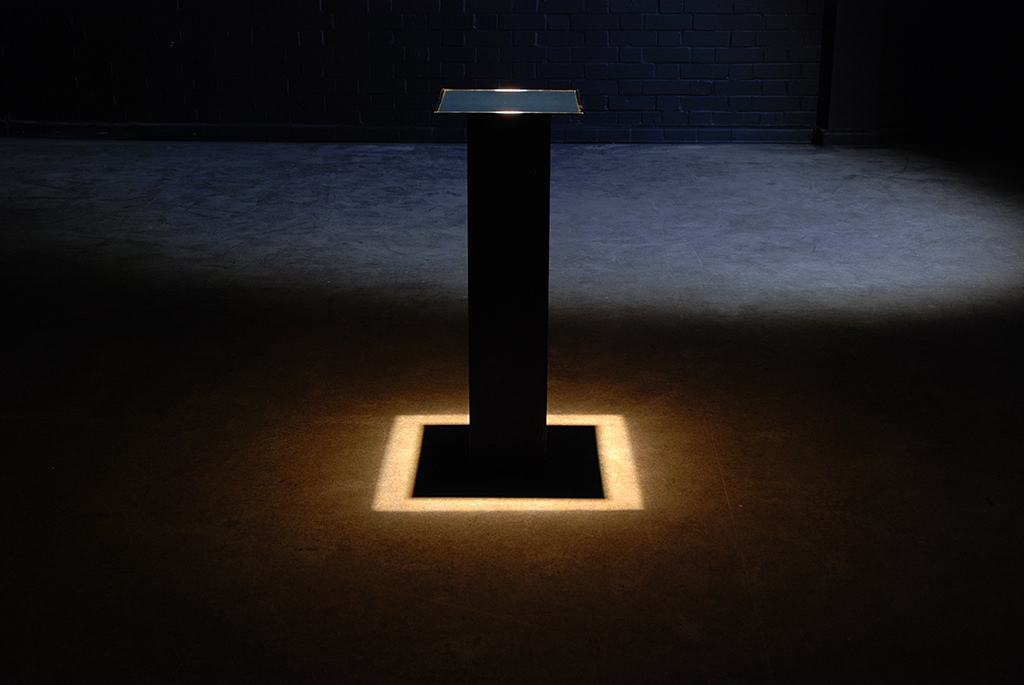
When initially approaching the work, the image in the hologram is not visible – only the structural arrangement that supports the holographic surface/volume.
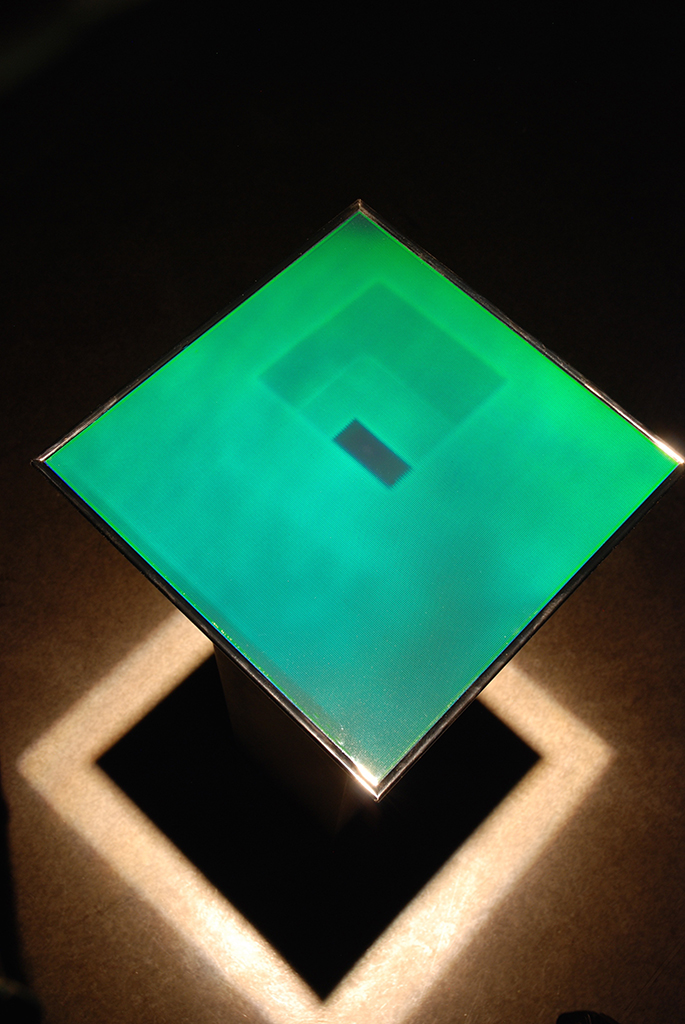
As the viewer changes their point of observation and moves within the vertical viewing zone of the hologram, a series of three luminous planes, each with a rectangular space, become visible.
One of these virtual surfaces ‘sits’ directly on the picture plane of the hologram’s surface, one protrudes into the observer’s space, and the third recedes into the hologram’s space.
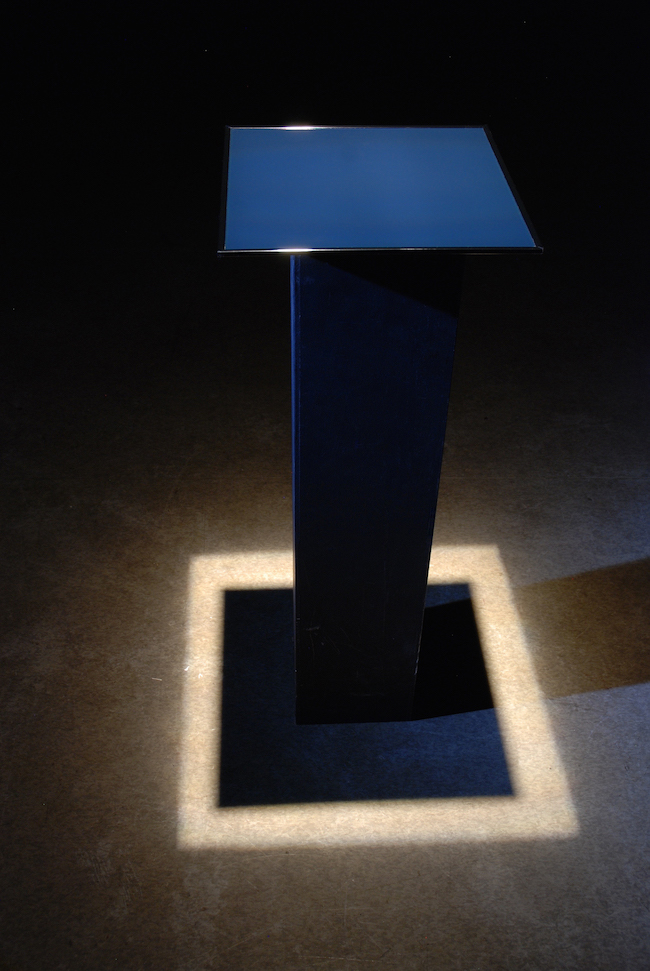
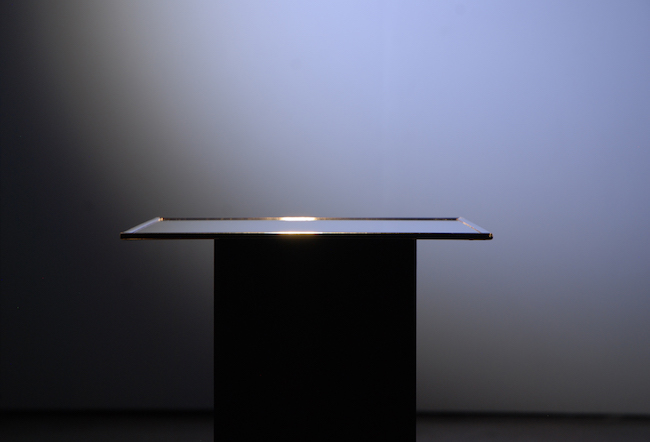
Galleries, museums and other display spaces have a well-developed ‘vocabulary’ that offers visitors suggestions about how they might interpret the work on show.
A raised plinth would normally be expected to support a three-dimensional object. If that object is a hologram, with its dimensional volume, how do we then ‘read’ or interpret what is being presented to us?
